The Battle of Adwalton Moor: The Day Drighlington Changed English History
On the morning of 30 June 1643, the quiet fields and windswept moorland around modern-day Drighlington became the scene of one of the bloodiest and most important battles in northern England during the English Civil War. What began as a desperate attempt to defend nearby Bradford turned into a brutal clash of cavalry, pikes, muskets and cannon fire that would change the balance of power across Yorkshire forever.
Today, thousands of drivers pass through Drighlington every day with little idea that beneath roads, housing estates and farmland lies a nationally protected battlefield — a place where Parliament nearly lost the North entirely.
A Battlefield Hidden Inside Modern Drighlington
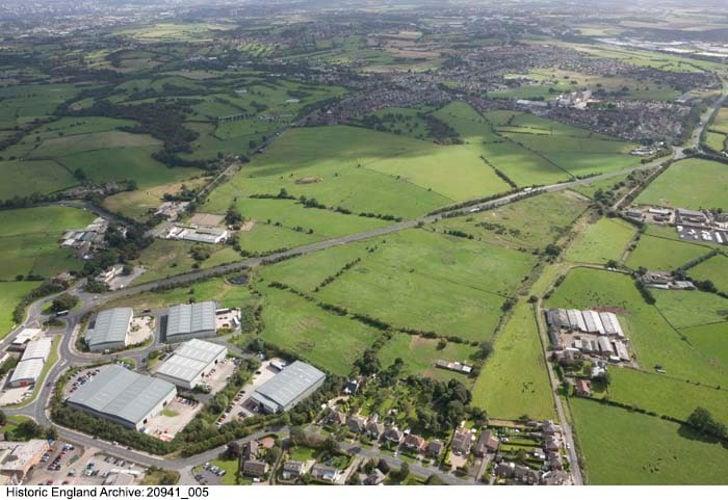
The battlefield of Adwalton Moor sits across the high ground between modern Drighlington and Adwalton, stretching around parts of today’s A650 corridor, fields near Moorside Road, and surrounding open land. Historic England officially recognises the site as a registered battlefield of national importance.
Unlike many famous battlefields that remain untouched countryside, Adwalton Moor is unusual because modern development now cuts directly through the historic site. Roads, homes and industrial areas occupy land where cavalry once charged and infantry formations collapsed under musket fire.
Even so, fragments of the original terrain survive.
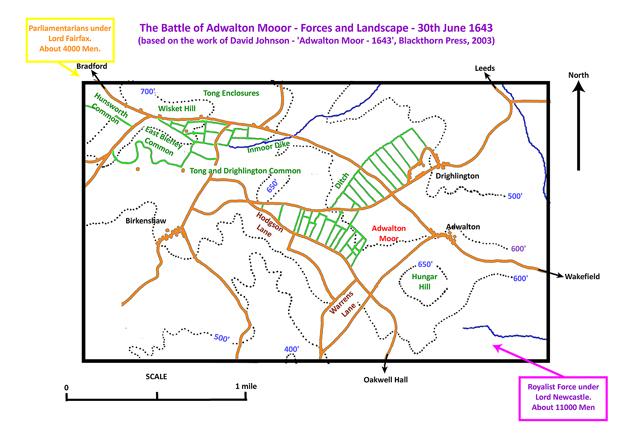
The battle was fought on elevated moorland mixed with enclosed fields divided by hedges, walls and narrow lanes. These features played a crucial role in how the fighting unfolded. Parliamentarian troops initially used the enclosed fields to protect themselves from Royalist cavalry attacks.
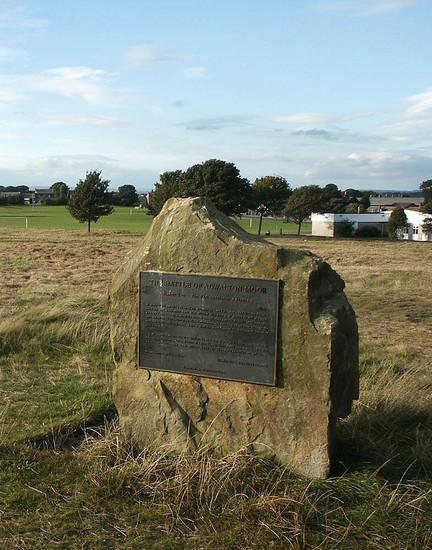
Here are modern views and surviving memorials connected to the battlefield:
England at War
To understand why the battle happened, you must understand the chaos gripping England in 1643.
The country had descended into civil war between:
- Royalists (Cavaliers) loyal to King Charles I
- Parliamentarians (Roundheads) fighting for parliamentary power
Yorkshire became one of the most important regions in the war. Whoever controlled Yorkshire controlled trade routes, industry and movement between northern and southern England.
At the time, Bradford and the surrounding cloth towns strongly supported Parliament. Meanwhile, large sections of Yorkshire’s aristocracy backed the King.
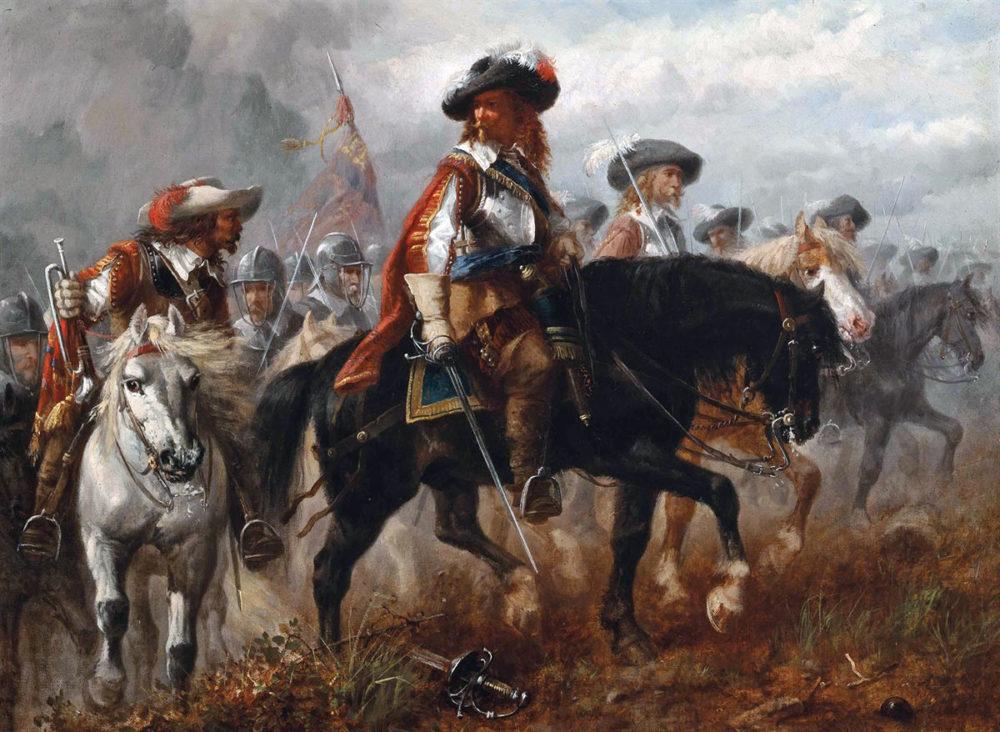
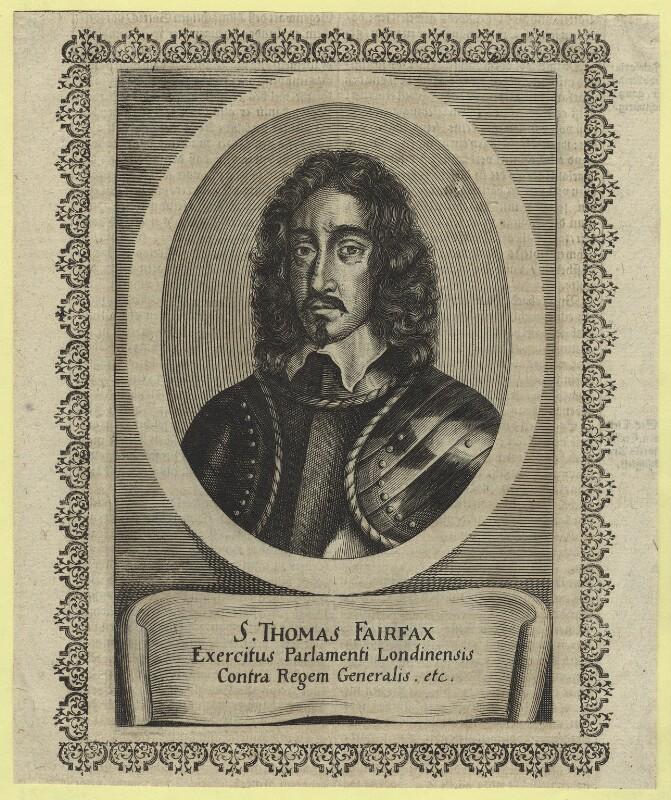
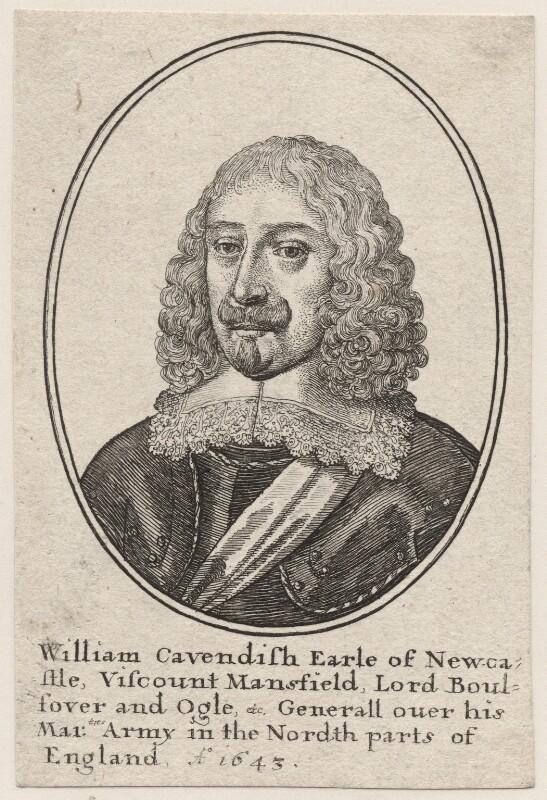
The Royalist commander in the north was the powerful and ambitious William Cavendish, Earl of Newcastle. Opposing him was Lord Ferdinando Fairfax and his son Sir Thomas Fairfax, who would later become one of Parliament’s greatest military leaders.
Why Drighlington Became the Chosen Battlefield
In June 1643, Newcastle’s Royalist army advanced toward Bradford after capturing strategic positions nearby, including Howley Hall near Batley. Their aim was simple:
Destroy Parliament’s northern resistance.
Bradford itself had poor defences. Fairfax knew that if he waited inside the town, the Royalists would likely overwhelm it quickly with artillery.
Instead, the Parliamentarians marched out to intercept Newcastle’s army before it reached Bradford. The two forces unexpectedly collided near the old Roman road crossing Adwalton Moor.
That Roman road still influences the layout of the modern village today.
Historians believe neither army deliberately selected the battlefield in advance. The location emerged from movement, scouting and chance contact between advance troops.
The Battlefield Layout
The terrain around Adwalton Moor was far different from the built-up landscape seen today.
In 1643 the area consisted of:
- rough moorland
- grazing fields
- stone walls
- hedges
- muddy tracks
- and elevated ridges exposed to wind and rain
This landscape mattered enormously.
The Parliamentarians initially positioned themselves within enclosed fields around Wisket Hill, giving their infantry protection from direct cavalry assault. Royalist troops advancing across open moorland struggled against defensive musket fire.
Many historians believe the battle was dangerously close to becoming a complete Royalist disaster.
The Morning the Battle Began
The battle likely started around 9am on 30 June 1643.
The Parliamentarian army consisted mostly of infantry, supported by limited cavalry and local “clubmen” — civilians armed with improvised weapons to defend their communities.
The Royalists possessed stronger cavalry and more balanced forces.
Early fighting centred on skirmishes near Wisket Hill before escalating into full-scale battle.
Parliamentarian troops pushed hard against the Royalist line and at one stage drove Newcastle’s men backwards toward their artillery positions. Some accounts suggest Royalist collapse briefly seemed possible.
For Drighlington’s surrounding fields, the noise would have been terrifying:
- cannon fire echoing across the moor
- muskets firing through smoke
- cavalry horses charging through mud
- wounded men trapped against walls and hedgerows
The battlefield became chaotic and brutally close-range.
The Turning Point
The battle changed in a matter of moments.
As Parliamentarian troops advanced from the protection of enclosed fields onto open moorland, they lost their defensive advantage.
A Royalist counterattack led by experienced pikemen shattered part of the Parliamentarian left flank. At the same time, Royalist cavalry swept around the exposed side of Fairfax’s army.
Once the Parliamentarian flank collapsed, panic spread rapidly.
Units became separated by hedges and lanes. Retreat routes clogged with soldiers and horses. Royalist cavalry pursued fleeing troops toward Bradford.
What had nearly become a Parliamentarian victory turned into a devastating defeat.
Death, Capture and Chaos
The losses were severe.
Historians estimate:
- around 500 Parliamentarian soldiers were killed
- roughly 1,500 were captured
- Royalist losses were far lighter, perhaps around 200 dead
Many of the dead likely fell not during the organised fighting itself, but during the collapse and retreat afterward.
Local streams, fields and lanes around Drighlington reportedly became clogged with fleeing troops. Some soldiers attempted to escape toward Bradford while others hid in nearby woodland and farms.
Sir Thomas Fairfax narrowly escaped capture.
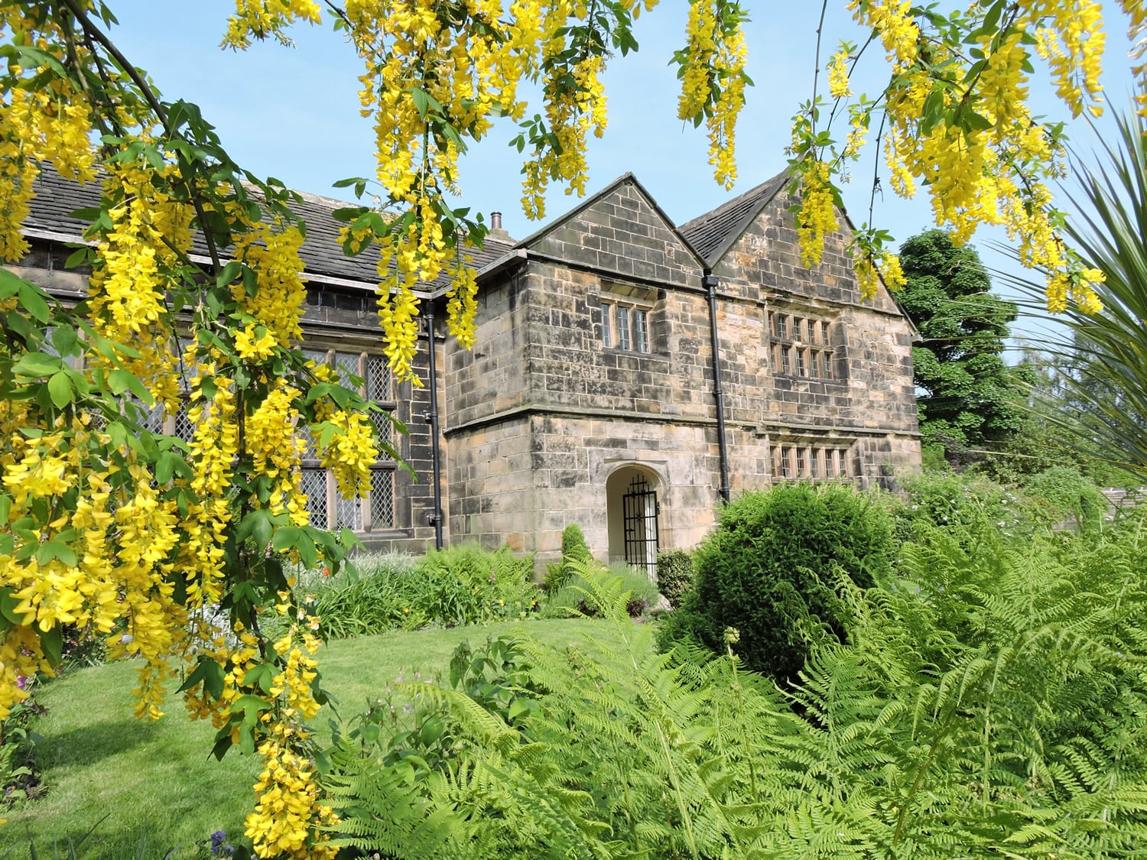
Legend and local tradition claim he used hidden routes and lanes toward Oakwell Hall to evade Royalist forces. Oakwell Hall itself later became strongly associated with Civil War stories and folklore.
Why the Battle Was So Important
Adwalton Moor was not simply a local fight.
Its consequences changed the Civil War in the North.
After the victory:
- Bradford fell
- Leeds surrendered
- Parliament lost control of much of Yorkshire
- and Royalist power expanded dramatically across northern England
Historians later described Adwalton Moor as second only to the Battle of Marston Moor in importance for the north of England during the Civil War.
The defeat also pushed Parliament into seeking stronger alliances with the Scots — a decision that eventually contributed to later victories against the King.
Ironically, the Royalist triumph at Drighlington may have helped create the political conditions that ultimately led to Parliament winning the war.
Lost Landscape: Where Exactly Was the Battle?
One of the biggest historical debates surrounding Adwalton Moor is the exact positioning of troops.
Researchers believe the battle spread across a wide area around:
- modern Adwalton
- Drighlington
- Wisket Hill
- parts of the A650 corridor
- and surrounding farmland
The battlefield was not a single flat open field.
Instead, it was a moving engagement fought across enclosed agricultural land, moorland ridges and crossing lanes.
Modern archaeological surveys have uncovered evidence consistent with Civil War activity, while landscape studies continue to identify possible troop movement routes.
This is one reason the battlefield remains nationally protected.
The Battlefield Today
Although much of the original landscape has disappeared beneath development, traces still survive for those who know where to look.
Visitors can still find:
- battlefield interpretation plaques
- commemorative stones
- surviving open moorland
- and sections of historic field boundaries
For many local residents, the battlefield remains one of Drighlington’s least understood historic treasures.
Unlike famous sites such as Hastings or Bosworth, Adwalton Moor rarely receives national attention despite its enormous historical significance.
Yet historians increasingly recognise that the battle helped shape the future of northern England during one of the most dangerous periods in British history.
The Forgotten Battlefield Beneath Drighlington
Today, traffic lights, shops and housing estates dominate the landscape where thousands of armed men once fought for the future of England.
But beneath modern Drighlington lies a battlefield that witnessed:
- cavalry charges
- collapsing infantry lines
- cannon bombardments
- desperate retreats
- and one of the defining Royalist victories of the English Civil War
The Battle of Adwalton Moor was not merely a Yorkshire skirmish.
It was a turning point in national history — and it happened in Drighlington.